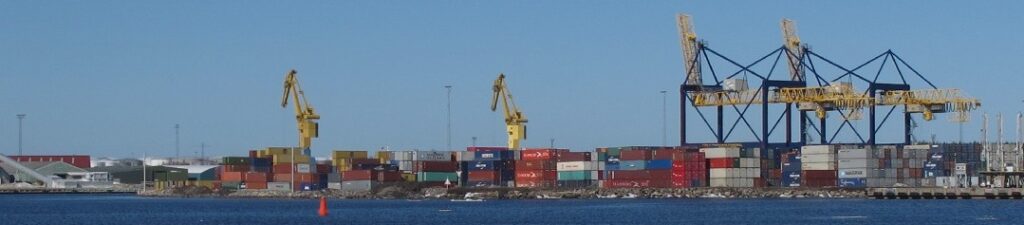
Where Industry Meets the City
Strategic Port Zoning for Sustainable Urban-Industrial Balance
In Sweden’s coastal cities—from Malmö to Sundsvall—ports operate at the intersection of logistics, economy, and everyday life. As urban areas expand and waterfronts evolve, efficient port zoning has become critical to managing growth without sacrificing functionality or community wellbeing.
At Port Zoning & Land Use, we help Swedish ports develop smart, flexible land-use strategies that support industrial competitiveness while respecting urban context, environmental goals, and public access.
The Urban-Port Interface: A Growing Challenge
Many Baltic ports are no longer isolated industrial zones—they’re embedded within cities, sharing space with housing, green areas, and transport infrastructure. This proximity creates opportunity, but also tension. Poorly planned zoning can lead to:
- Noise and emissions conflicts with residential areas
- Inefficient land use and congestion at port gates
- Delays in permitting and public resistance to expansion
- Missed opportunities for waterfront revitalisation or mixed-use development
That’s why forward-thinking zoning is essential—not just for compliance, but for coexistence.
Our Approach to Smart Port Land Use
We support port authorities, municipalities, and regional planners in creating zoning strategies that balance operational efficiency, economic development, and urban harmony.
Our services include:
- Functional zoning plans that separate cargo, passenger, and industrial uses
- Buffer zones and land transitions between port and city environments
- Integration of port logistics with city transport and mobility networks
- Guidelines for noise, emissions, and visual impact mitigation
- Collaboration frameworks between city and port stakeholders
Each solution is designed with Swedish planning policy, Baltic regional dynamics, and long-term flexibility in mind.
Optimising Land in a Finite Footprint
For many Swedish ports, available land is limited—and costly. That makes smart land allocation more important than ever. We help ports:
- Prioritise space for high-value or time-sensitive cargo
- Reserve corridors for future modal upgrades (rail, EV, shore power)
- Create adaptive-use zones for emerging industries and energy storage
- Evaluate trade-offs between revenue-generating leases and strategic reserves
Our focus is always on enabling growth without compromising long-term spatial resilience.
A Shared Waterfront, A Shared Responsibility
Ports are vital to Sweden’s economy—but they’re also part of the communities they serve. With the right zoning strategy, ports can remain efficient logistics hubs and active contributors to sustainable urban development.
We believe land-use planning should do more than organise space—it should align interests, reduce friction, and unlock shared value for city and port alike.
Let’s shape your port’s footprint for today’s needs—and tomorrow’s possibilities.