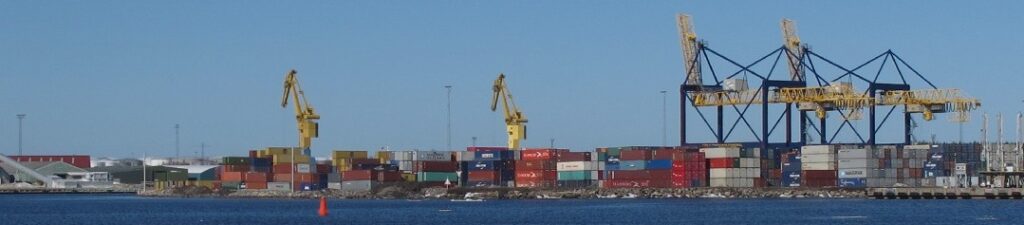

Small Ports, Big Impact: The Baltic’s Quiet Logistics Engine
In the world of maritime logistics, it’s not always the large, deep-sea terminals that move regional economies forward. Across the Baltic Sea—and especially in Sweden—short-sea shipping hubs are proving their strategic value. These smaller, agile ports support efficient cargo movement, reduce road congestion, and strengthen local supply chains.
At Short-Sea Shipping Hubs, we focus on the growing role of regional ports in sustainable, cost-effective logistics—positioning Sweden as a central player in northern European trade routes.
What Is Short-Sea Shipping?
Short-sea shipping refers to the transport of goods by sea over relatively short distances, often within the same continent. In the Baltic context, this means fast, frequent movements between Swedish coastal ports and nearby terminals in Finland, the Baltics, Germany, Poland, and Denmark.
For Sweden, it’s a powerful logistics model:
- Reduces dependence on long-haul trucking
- Lowers emissions and environmental impact
- Improves cargo flow to inland and rural areas
- Strengthens trade resilience across smaller nodes
The Advantage of Smaller Baltic Ports
Sweden’s smaller ports—from Norrköping to Ystad—are leaner, more adaptable, and closer to end users than many larger terminals. That proximity translates to faster turnaround, more frequent departures, and less strain on national road infrastructure.
These ports serve as:
- Feeder hubs connecting to larger intermodal networks
- Export routes for forestry, steel, and agribulk industries
- Relief valves for congested city-port gateways
- Innovation zones for digital logistics and green fuels
Building a Smarter Maritime Network
To unlock the full potential of short-sea shipping, coordination and investment are key. We support Swedish port operators, logistics firms, and public planners in scaling up the role of smaller ports through:
- Infrastructure upgrades for shallow-draft vessels
- Scheduling optimization and digital cargo tracking
- Multimodal connections to rail and inland terminals
- Sustainable energy and shore power initiatives
A Baltic Strategy, Rooted in Sweden
Sweden is uniquely positioned to lead in short-sea logistics, thanks to its geographic reach, maritime expertise, and regional partnerships. By empowering smaller ports, we enable not just more efficient shipping—but more balanced, resilient trade across the entire Baltic Sea region.
Let’s rethink the role of small ports—not as secondary, but as essential.